
South-facing solar
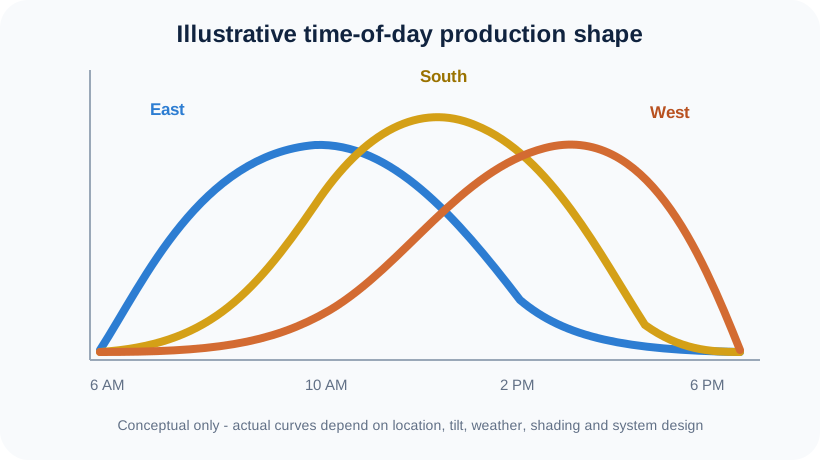
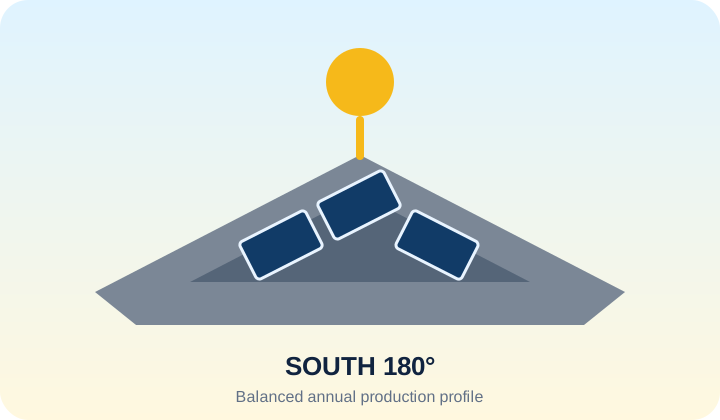
For fixed arrays in the northern hemisphere, south-facing orientation typically maximizes annual electricity production. DOE also notes that southeast through southwest can work well.
East-facing solar
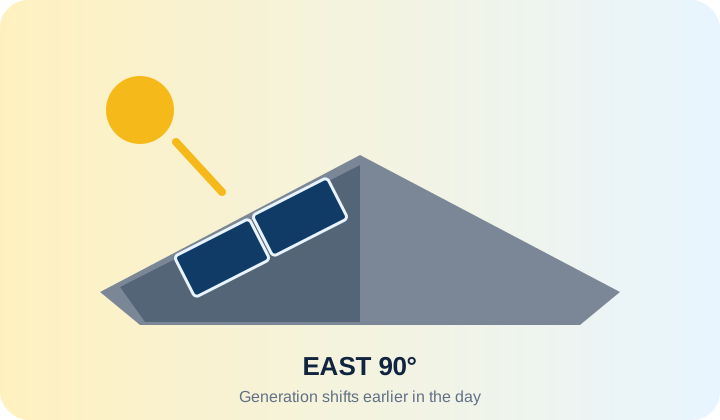
East-facing modules shift more production into the morning. They can make sense where the roof dictates the layout or where household consumption is concentrated earlier in the day.
West-facing solar
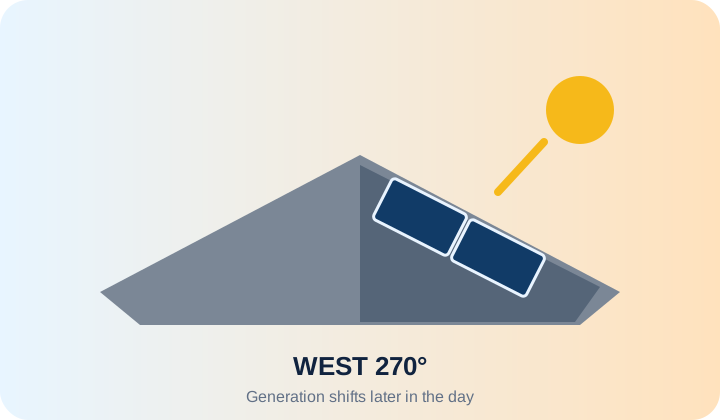
West-facing modules shift more production into the afternoon. NREL notes that increasing azimuth beyond south favors afternoon energy production, which can matter under some time-of-use rate structures.
The key distinction: annual energy vs time-of-day value
A south-facing roof may generate more total kWh over a year, but the economic value of each kWh depends on when your home uses electricity, what your utility charges at that hour and what it pays or credits for exported solar. A west-facing array can therefore be strategically useful even when its annual production is lower than a comparable south-facing array.
| Question | South | East | West |
|---|---|---|---|
| PVWatts azimuth | 180° | 90° | 270° |
| Typical daily emphasis | Midday / balanced | Morning | Afternoon / early evening |
| Annual production tendency | Usually highest in the northern hemisphere | Usually below a comparable south-facing array | Usually below a comparable south-facing array |
| Potential homeowner fit | Maximizing annual kWh | Morning-heavy household demand | Afternoon-heavy demand or some TOU situations |
| What can outweigh orientation | Shade, roof area, tilt, weather, system size and utility rules | Shade, roof area, tilt, weather, system size and utility rules | Shade, roof area, tilt, weather, system size and utility rules |
Choose the best roof plane, not the compass label alone
A clean east or west roof with little shade may outperform a partially shaded south roof. Roof area, obstacles, pitch and shade must be evaluated together with azimuth.
Split arrays are normal
Many homes use multiple roof planes. East-west systems can spread generation across a longer portion of the day rather than concentrating it around solar noon.
TOU economics are utility-specific
Do not assume west is automatically more valuable. Compare your utility's current import rates, export compensation and peak periods before assigning a dollar value to afternoon generation.
What NREL means by azimuth
PVWatts measures array azimuth clockwise from true north: north is 0°, east is 90°, south is 180° and west is 270°. NREL states that 180° typically maximizes annual production in the northern hemisphere, while higher azimuth values favor afternoon production and lower values favor morning production.
Run your actual roof instead of relying on a generic percentage
Generic orientation-loss percentages can be misleading because the result changes with latitude, local weather, tilt, shading and roof geometry. Use an address-level roof model where available, then use PVWatts-based production modeling for the proposed array.
Primary references
These diagrams explain the concept; they are not production forecasts. The orientation definitions and time-of-day behavior are based on NREL PVWatts / REopt documentation, while DOE provides homeowner guidance on suitable roof orientation and slope.
Illustrations are original Home Solar Atlas explanatory graphics. Actual hourly production depends on location, tilt, weather, shading, equipment and system design.