
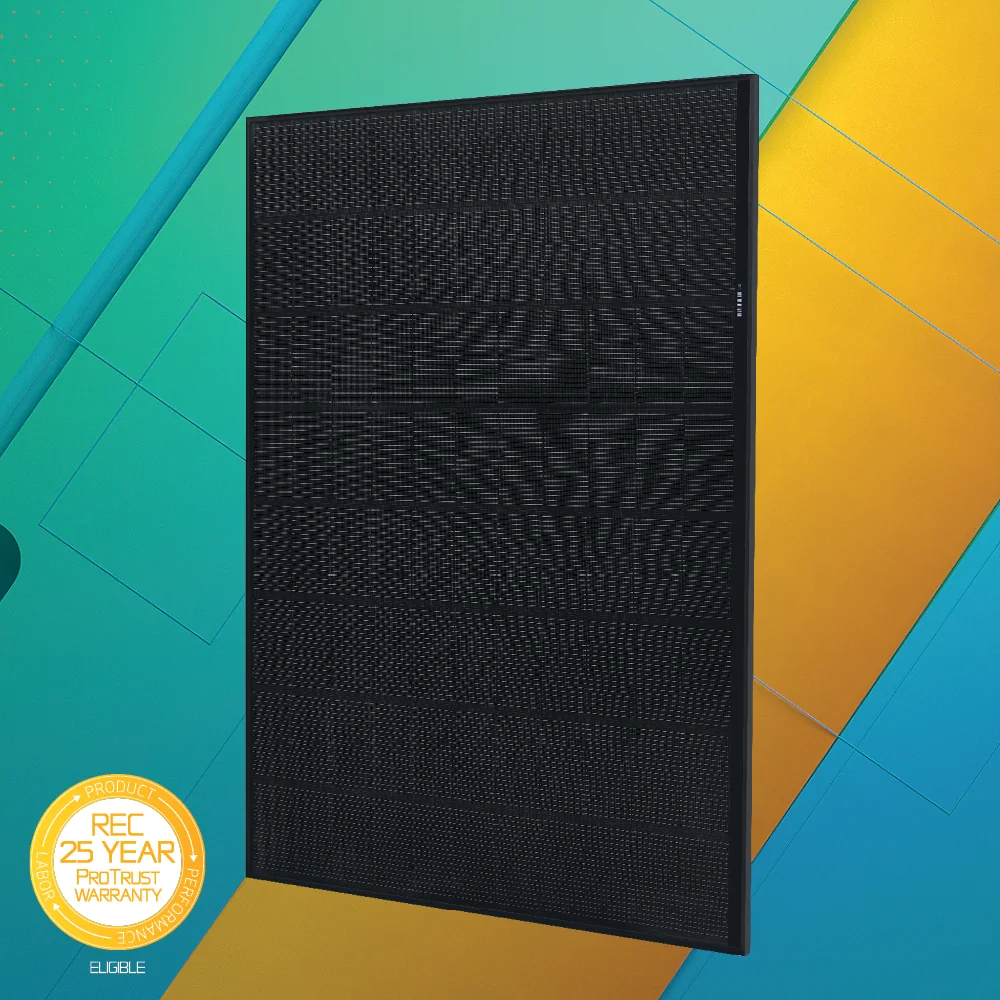
REC Alpha Pure-RX
HJT (heterojunction). Home Solar Atlas currently tracks this family at 450-470 W and up to 22.6% module efficiency.
Open full REC specifications →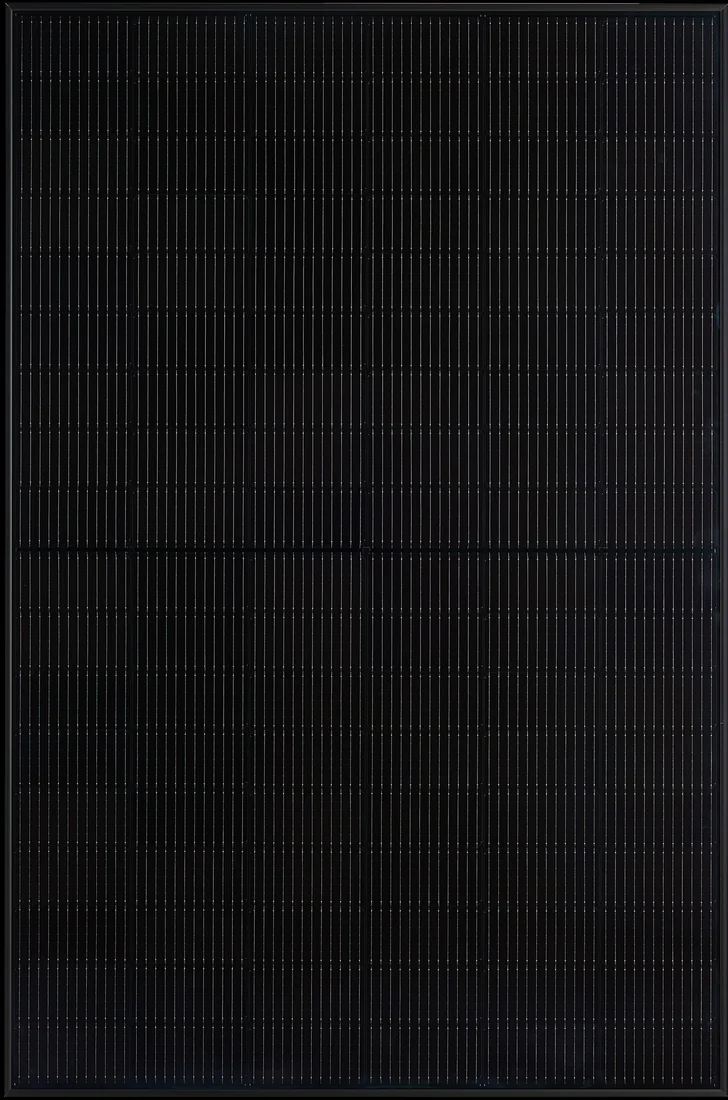
Qcells Q.TRON BLK M-G2+
N-type TOPCon / Q.ANTUM NEO. The tracked residential family reaches 415-440 W and up to 22.5% module efficiency.
Open full Qcells specifications →
Silfab SIL-440 QD
N-type silicon. It is a useful reminder that proposal labels can be less specific than the underlying cell architecture, so the current datasheet should control.
Open full Silfab specifications →What is physically different?
These diagrams are conceptual, not manufacturing cross-sections. They show why HJT and TOPCon are cell-architecture terms rather than alternatives to monocrystalline silicon.
HJT - heterojunction
HJT combines a crystalline-silicon wafer with thin heterojunction passivation/contact layers on the surfaces. The goal is to reduce electrical losses at the interfaces while maintaining a high-quality crystalline absorber.
TOPCon - tunnel oxide passivated contact
TOPCon adds a passivated rear-contact structure designed to reduce recombination while preserving efficient carrier transport. The finished residential module still needs to be judged by its published specifications.
HJT vs TOPCon vs “monocrystalline”
| Question | HJT | TOPCon | Monocrystalline |
|---|---|---|---|
| What the label describes | A heterojunction cell architecture built around a crystalline-silicon wafer with thin passivating layers | A passivated-contact architecture using a thin tunnel-oxide layer and a doped contact layer | Monocrystalline describes the silicon crystal structure of the wafer, not one specific passivated-contact architecture |
| Can it be monocrystalline? | Yes | Yes | Yes - this is the broader wafer category |
| Why manufacturers use it | Reduce recombination and push cell efficiency while using a heterojunction contact structure | Reduce recombination at the rear contact while building on high-efficiency crystalline-silicon manufacturing | Provide a high-quality single-crystal silicon base that can be combined with different modern cell architectures |
| What homeowners should compare | Module efficiency, wattage, dimensions, warranty, degradation terms and installed price | Module efficiency, wattage, dimensions, warranty, degradation terms and installed price | The exact finished module - not the word monocrystalline by itself |
| What the label does not guarantee | The best annual kWh on every roof or the best project value | The best annual kWh on every roof or the best project value | A specific efficiency, warranty, degradation rate or inverter design |
Technology matters more when roof space is tight
If two modules have different efficiency at similar dimensions, the higher-efficiency option can fit more DC capacity into a constrained roof area. That can matter on small roof planes, but it still does not automatically make the higher-efficiency module the best economic choice.
The finished module matters more than the acronym
Compare exact wattage, module efficiency, dimensions, product warranty, performance warranty, degradation terms and installer price. Then check whether the inverter is electrically compatible with the selected module.
What to ask when a salesperson says “premium panel”
- What is the exact manufacturer and model number?
- What cell technology does the current manufacturer datasheet specify?
- What are the module wattage, efficiency and dimensions?
- What does the product warranty cover, separately from the performance warranty?
- What is the solar-only installed cash price per watt with this module?
- Would a different panel materially change system size, roof fit or annual production?
Product specifications shown above come from the Home Solar Atlas equipment profiles and their linked manufacturer sources. Cell-architecture diagrams are simplified educational illustrations and are not intended as manufacturing or electrical-design documentation.